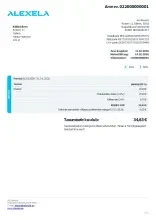
How is the electricity bill formed?

14. July 2026
The electricity bill may seem complicated at first glance, as it consists not only of the cost of consumed electricity. The size of the bill is also affected by network services, national fees, and taxes. Some of these depend on your chosen electricity package, and some are nationally established. Let's take a closer look at what the electricity bill consists of and what each line item actually means.
In general, an electricity bill is divided as follows:
- electricity accounts for approximately half of the bill;
- the network service accounts for about one quarter;
- the remaining part consists of state-regulated charges and taxes, such as electricity excise duty, VAT, the security of supply fee, the balancing capacity fee, and the renewable energy fee.
Electricity
Electricity makes up the largest part of your electricity bill. This is the amount you pay for the electricity you have used during the month. How much you pay depends primarily on the electricity plan you have chosen. The price may either be agreed in advance under a fixed-price plan or vary according to the electricity market under a spot-price plan. You can find out more about Alexela’s electricity plans on our website.
Network service fee
This fee covers the operation and maintenance of the electricity grid by Elektrilevi. Elektrilevi is responsible for delivering electricity from the grid to homes and businesses. It is also responsible for ensuring the reliability of the electricity network and resolving faults when necessary.
Electricity excise duty
Electricity excise duty is a tax established by law. It is calculated for every kilowatt-hour consumed and is paid into the state budget.
Value added tax
As with most goods and services, VAT at the applicable rate of 24% is added to all charges on the electricity bill.
Balancing capacity fee
Electricity generation and consumption must remain balanced at all times. This means that exactly as much electricity must be generated as is being used at any given moment. The balancing capacity fee helps cover the costs of keeping the electricity grid stable and ensuring preparedness for unexpected changes in generation or consumption.
Security of supply fee
The security of supply fee helps ensure that there is enough electricity available in Estonia even when, for example, renewable energy generation is low or consumption is higher than usual. It is used to finance reserve capacities that can begin generating electricity quickly when needed.
Renewable energy fee
The renewable energy fee helps finance renewable energy generation in Estonia. Its rate is set annually by Elering and is the same for all electricity consumers.